
The 2026 Mattress Buying Guide / Brett & Hugo
Spend on better sleep.
Understand what you’re buying.
Our approach is simple: choose a mattress because it fits you, then make sure the complete purchase fits your budget.

A note from Brett & Hugo
We see people compare two mattresses that look similar and wonder why the price is so different. That’s a fair question. A cover can hide very different materials underneath. We want you to understand the differences, try them, and decide which ones are worth paying for.
The most expensive bed is not automatically your best bed. The right purchase is one you can explain: “I chose this because it feels better for me, and I know what’s included.”
Start with a planning range.
Use these broad Queen-mattress budgets to organize your comparison. They are planning examples, not product quotes or promises about every mattress in a price tier. Sale prices, size, materials, and model change the result.
| Planning budget | What to compare | Our question for you |
|---|---|---|
| Under $1,000 | Essential comfort, support, and value-focused construction. | Does this meet the everyday need without leaving out a required base or delivery? |
| $1,000–$2,499 | A wider choice of foam and hybrid builds, comfort options, and materials. | Can you feel a useful improvement over the lower-priced option? |
| $2,500–$4,999 | Premium comfort systems, specialized cooling, more involved upholstery, and brand-specific materials. | Which upgrade makes this a better fit for you? |
| $5,000 and up | Advanced or specialty sleep systems, luxury construction, and particular material preferences. | Are the features worth it for your priorities and complete budget? |
Six things that can change the price.
1. Size
Compare the same size and configuration. A “starting at” Twin price is not a Queen price, and a split setup can involve more than one mattress.
2. The comfort materials
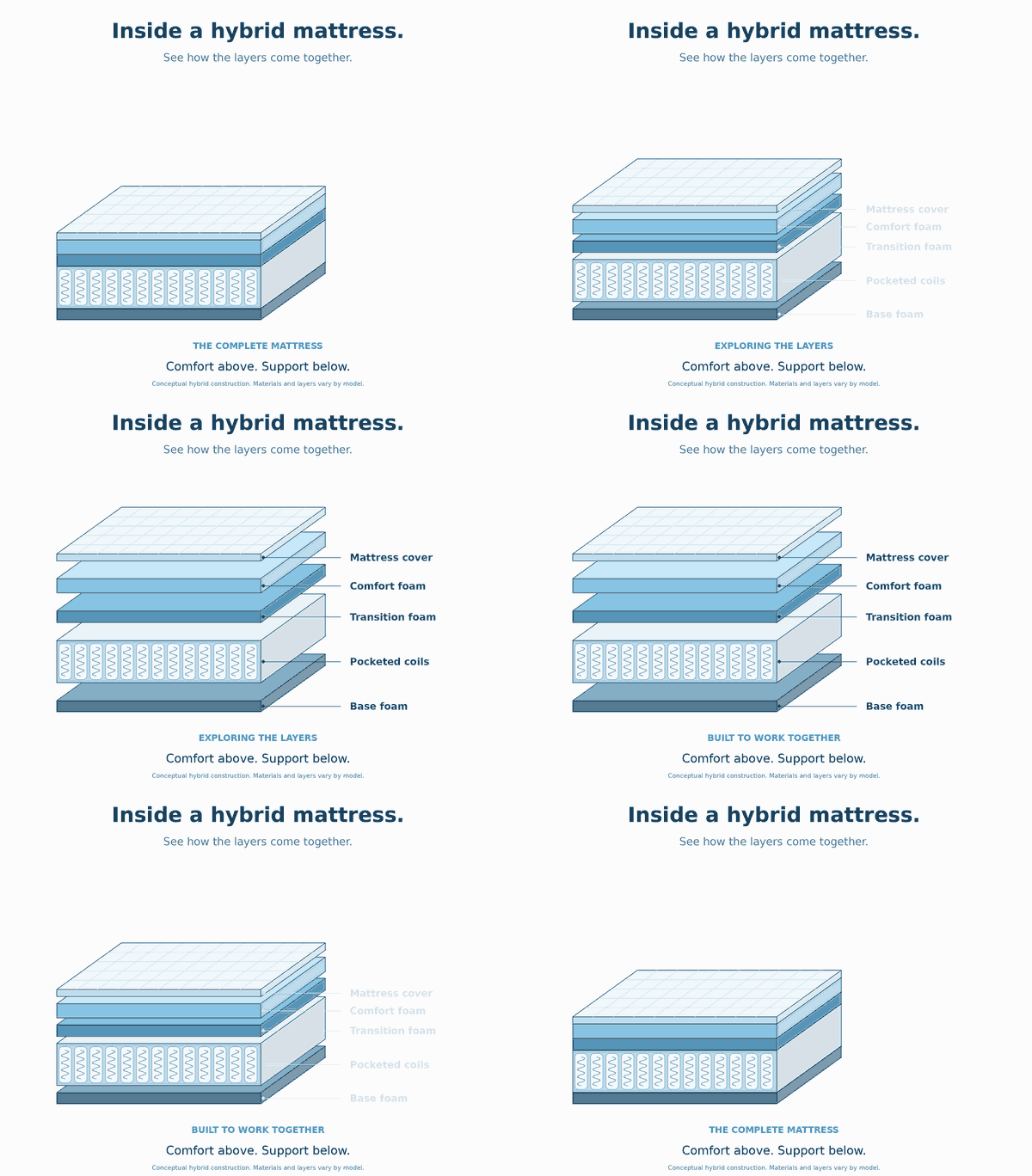
Foam formulation and density, latex, gel, wool, and other materials have different sourcing and manufacturing costs. More layers alone are not a quality score.
3. The support system
Coil design, edge reinforcement, zoning, and the way the layers work together matter more than one impressive number on a sign.
4. Temperature features
A cool-to-the-touch cover, an airflow design, and an active cooling system are different features. Ask what a feature does, how it was tested, and whether you notice a benefit.
5. How it is made
Quilting, upholstery, tufting, finishing, and specialized construction can add labor and cost. Compare the finished feel instead of buying the word “luxury.”
6. The complete purchase
The support base, protector, delivery, setup, taxes, and payment-plan costs can change the real total. Keep these separate when comparing offers.
Build the whole budget before you choose a payment.
- Mattress: exact model, size, firmness, and cover.
- Support: a compatible frame, foundation, or adjustable base.
- Protection: a correctly fitted protector and bedding you need.
- Delivery: free doorstep for eligible products, $100 local doorstep, or $250 nationwide White Glove with setup and old-mattress removal.
- Payment costs: taxes, any required initial payment, interest or lease cost, and total repayment.
A small daily number is only a perspective.
For example, a $2,400 mattress used for eight years averages about 82 cents per night before tax, accessories, service, or financing costs. That is arithmetic—not a prediction of lifespan or a reason to stretch your budget. Your actual use and replacement timing can differ.
Make the comparison personal.
Lie in your normal sleep position. Notice whether your shoulders and hips feel crowded, whether turning feels easy, how stable the edge feels, and how your partner’s movement travels. A material or feature earns its place when it improves something you care about.
Read the written comfort-exchange and warranty terms. A warranty addresses covered defects; it does not mean every change in comfort is covered.